

5 Calming Essential Oils in Natural Skin Care
Five calming essential oils that do more than smell good. See how Rose, Lavender, Chamomile, Sandalwood, and Neroli soothe skin and ease the senses in JK7's natural rituals.
Lavender, German chamomile, Moroccan rose, neroli, and sandalwood have long been valued for both their soft, grounding scents and their use in natural skin care. Each brings something different to a skincare ritual, from lavender's fresh floral aroma to the warm, grounding scent of sandalwood.
In this guide, we'll look at what these oils are, how they are traditionally used in aromatherapy and skin care, and what makes each one unique. We'll also cover how to use them safely and explore where these five botanicals feature in JK7® formulations.
What Are Calming Essential Oils?
Essential oils are concentrated plant extracts made from flowers, leaves, wood, or peel. They are commonly used in two ways, either by inhaling their scent through diffusion or directly, or by applying them topically after dilution in a carrier oil or a finished skincare product.
The word "calming" here refers to oils traditionally associated with relaxation and soothing scents, such as lavender and rose. They differ from brighter, more stimulating oils like citrus or peppermint, which are often chosen for a more energising experience rather than relaxation.
For a wider view of how plant ingredients behave on the skin, see our guide to natural skin care ingredients.
How Essential Oils Help With Stress
Scent reaches the brain through the limbic system, a region involved in emotion and memory. Some aromatic compounds are also linked to the parasympathetic nervous system, which helps the body rest and relax. This may be part of why certain familiar scents can feel calming.
A 2025 narrative review in the Journal of Integrative Dermatology found that lavender oil and its main compound, linalool, reduced signs of autonomic arousal in several studies. These included lower heart rate, blood pressure, or skin temperature after inhalation or topical use.
Separately, a 2012 human study by Fukada and colleagues, published in Chemical Senses, found that inhaling rose essential oil reduced stress-related increases in salivary cortisol and water loss from the skin barrier among students during a period of academic stress.
Research suggests that these aromatic oils may offer more than a beautiful scent, although everyone's experience can be different. In a skincare ritual, aromatherapy can add a gentle sense of calm and well-being, while the oils and botanical ingredients themselves offer their own cosmetic and skin-supporting benefits.

Lavender
Known for its familiar calming scent, lavender is a popular choice for evening rituals. In skin care, it is valued for its soothing and cleansing properties and for helping skin look fresh and balanced.
However, as with any essential oil, lavender may not suit everyone. Some people can experience skin irritation or sensitivity, which is why it is important to follow recommended dilution and application guidelines.
German Chamomile
Gentle and soothing, German chamomile is often used in both aromatherapy and skin care. It can help calm and comfort the appearance of stressed skin and is also known for its toning properties. These benefits are partly linked to naturally occurring chamazulene, the compound responsible for the oil's deep blue color.
Moroccan Rose
Moroccan rose brings a soothing, toning quality to skin care, with a gentle astringent effect that can help skin look more balanced. Its scent is also associated with emotional balance and a sense of calm.
The Fukada study found that inhaling rose oil reduced stress-related increases in cortisol and water loss from the skin barrier during exams. As with lavender, some people may experience allergic reactions to rose oil, so patch testing is recommended before use.
Neroli
Distilled from bitter orange blossoms, neroli has a fresh, uplifting scent that can also create a sense of calm. In skin care, it is commonly used to support fresh-looking skin and help comfort dry or sensitive skin.
Sandalwood
Warm, woody, and lingering, sandalwood is traditionally associated with deep relaxation and restful sleep. In skin care, it can also help soften the appearance of fine lines and comfort skin that looks tired or uneven.
A Calming Ritual with Essential Oils in JK7® Formulas
Each of these essential oils is woven into different moments of the JK7® ritual, from a refreshing mist to a quiet moment of hand and eye care. Together, these products create a routine that engages both skin and senses.
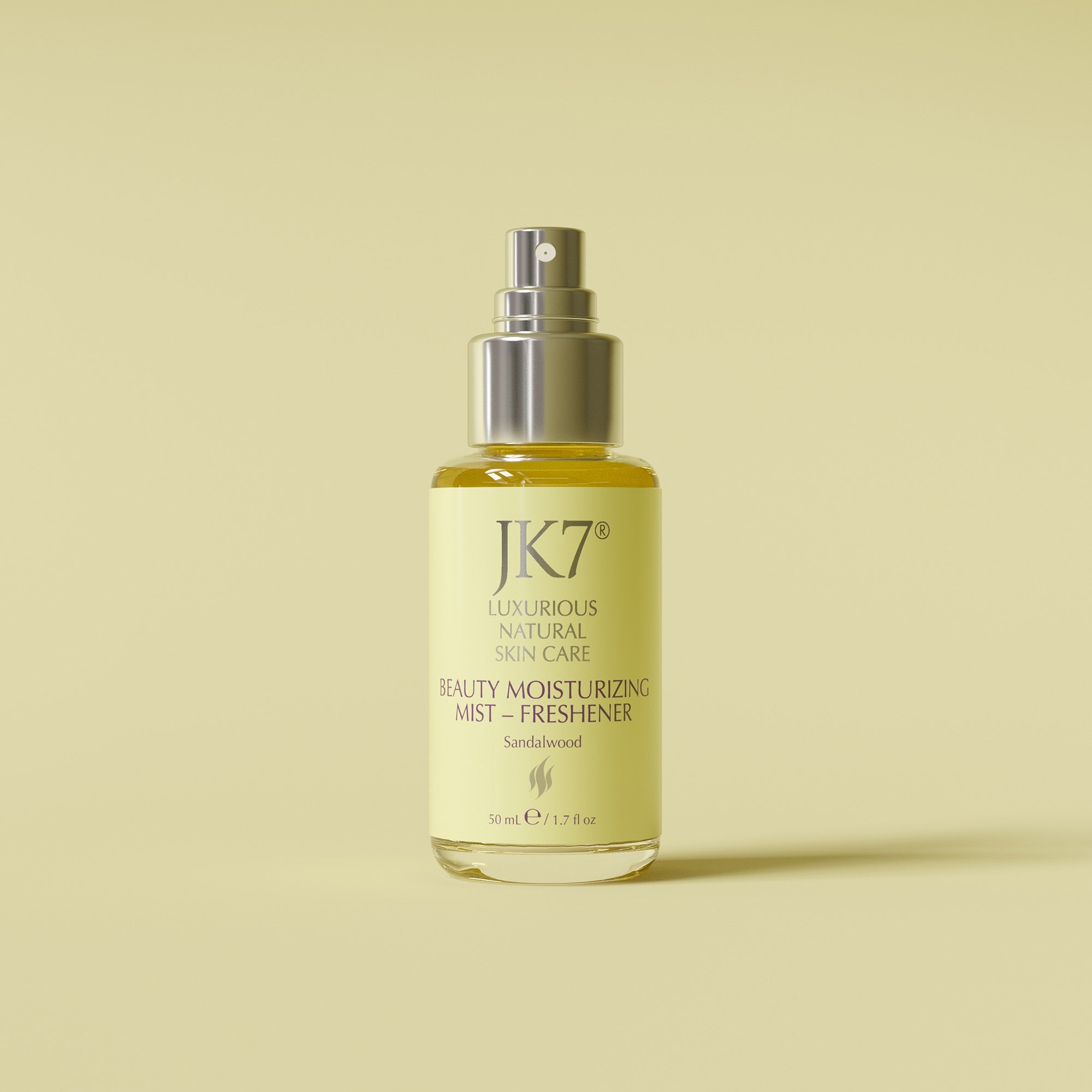
Reset: Beauty Moisturizing Mist – Toner (Sandalwood)
Start with the Beauty Moisturizing Mist (Sandalwood), a refreshing mist designed to hydrate, tone, and refresh the skin while providing a calming aromatherapy effect.
Its warm sandalwood scent makes it a natural opening for the ritual, particularly when you need a moment to ease your mind and lift your spirits.
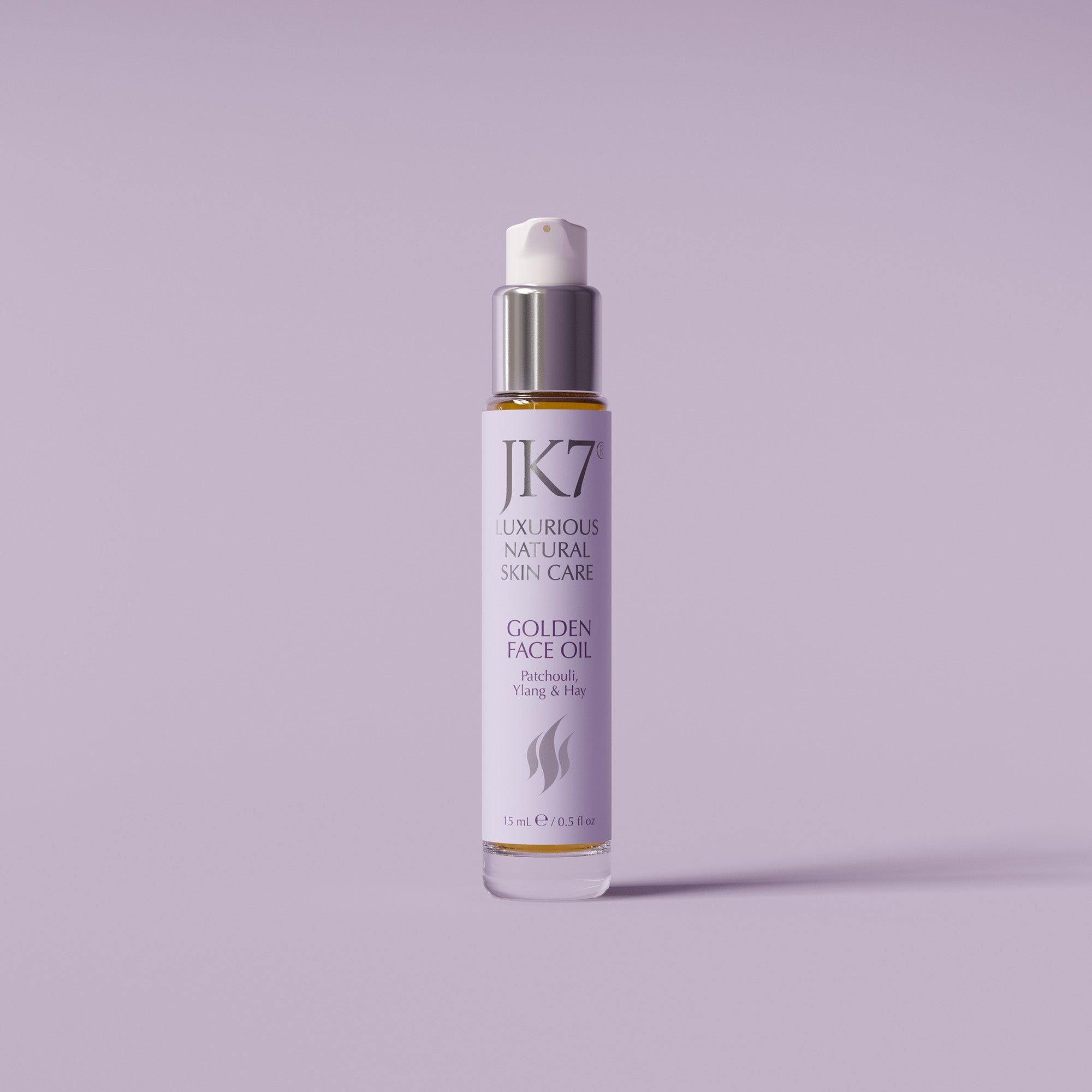
Massage: Golden Face Oil
For a slower step, the Golden Face Oil can be worked into a facial or lymphatic massage. Its blend of essential oils includes ylang ylang, known for its skin-refreshing and antiseptic qualities, patchouli, often associated with skin cell regeneration, and distilled hay oil, traditionally used for its calming effect on the skin.
The massage itself turns application into a few unhurried minutes of focused self-care.
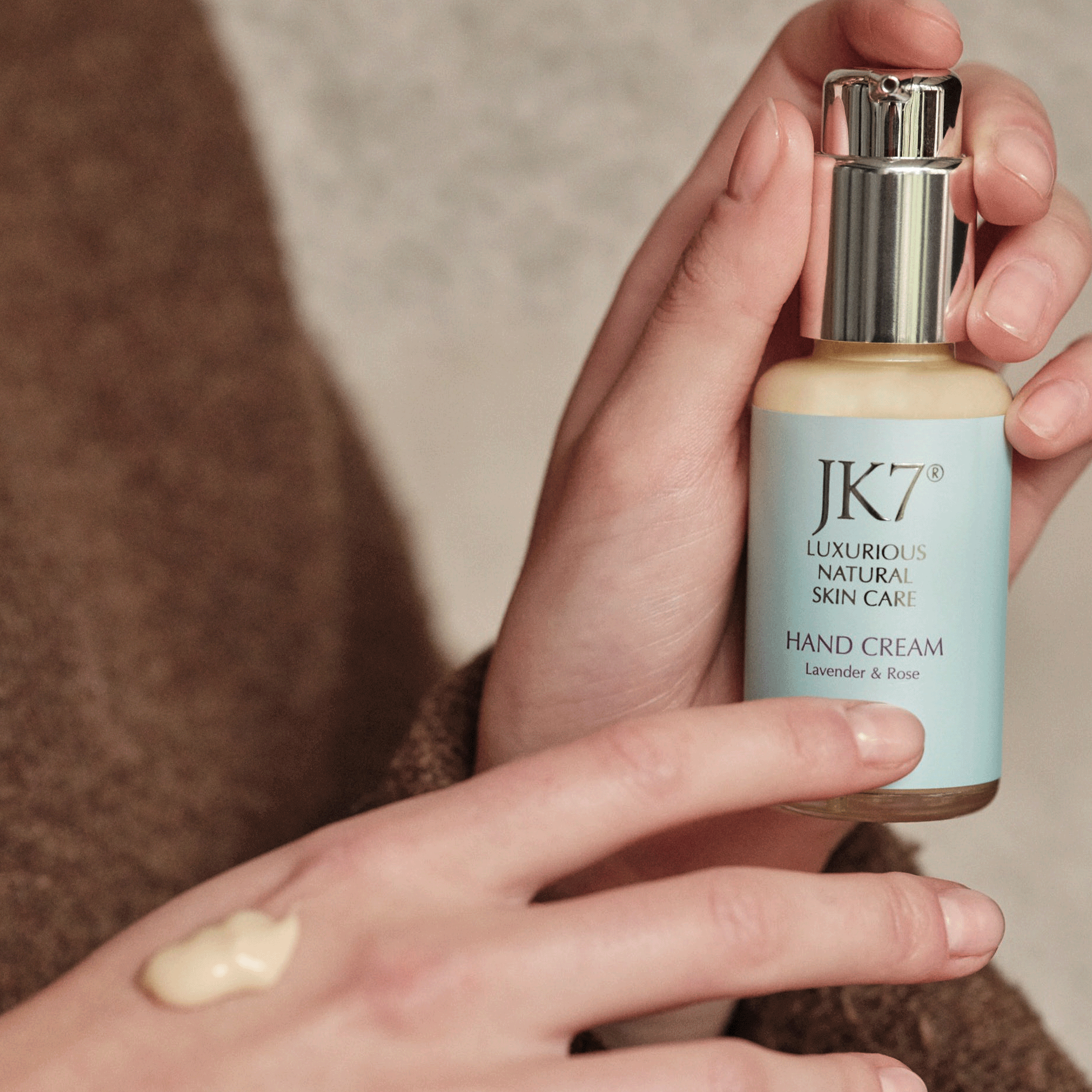
Hand Care: Hand Cream
A calming ritual does not have to stop at the face. The Hand Cream brings lavender and rose into a simple moment of hand care, with a fast-absorbing texture that makes it easy to use throughout the day.
Take a few seconds to massage it into your hands, nails, and cuticles whenever you need a small pause.

Eye Care: Eye Cream
Finish with the Eye Cream, focusing on the delicate skin around the eyes.
Infused with chamomile and rose, it provides a gentle closing step to the ritual while leaving the eye area feeling moisturized, calm, and refreshed.
Why We Treat Calm as Part of Skin Care, Not Separate From It
The stress and pressure from our daily routine don’t just affect how we feel, but also show up on the skin. This is why JK7® takes a broader view of skin care philosophy, where life balance and mental health are considered part of overall well-being alongside the products used on the skin. The idea is simple: creating moments to slow down, reset, and care for yourself can have a place within your daily skin care ritual, too.
We work with rare, organic, or wild-crafted oils at pharmaceutical-grade concentrations, selected for their individual properties as well as the sensory experience they bring to a formula. In this way, the same product can support the skin while making the act of applying it feel more intentional, turning a routine step into a moment to pause and reconnect.
If you want to understand more about the connection between stress and visible skin aging, read our guide: Does Stress Cause Wrinkles?.
Calming Skin Care Is Built Through Ritual
Calm is rarely created by a single ingredient or one application. Like effective skin care, it is built through small, consistent habits that give your skin the care it needs while creating space to slow down and reset.
Quality botanical oils can become part of that rhythm, bringing together the properties of the ingredients themselves with the sensory experience of using them. Over time, a calming skin care ritual can become more than another task in your day. It can be a simple daily practice of caring for both your skin and your senses.
For more guidance on building a consistent routine, explore our guide to a natural skin care routine that actually works.
Frequently Asked Questions
Both can be true, but they are two different effects. The scent of an essential oil influences your sensory experience through smell, while the oil's individual compounds can interact with the skin and contribute to effects such as improved comfort, reduced appearance of redness, or better hydration, depending on the ingredient.
Many essential oils are traditionally considered gentle and well tolerated. However, any essential oil can cause sensitivity or irritation in some people, particularly when used at high concentrations.
Patch testing is a sensible precaution, and it is generally better to choose a properly formulated skin care product rather than applying undiluted essential oils directly to the skin. For a deeper look at how to support sensitive skin, see our guide to the skin barrier.
Some essential oils may be suitable during pregnancy when used in low concentrations within a properly formulated product, but safety can vary depending on the specific oil and stage of pregnancy. If you are pregnant or breastfeeding, it is best to check with your healthcare provider and consult our guide to pregnancy-safe skin care ingredients before introducing new products.
The sensory effect of a calming scent can be noticed almost immediately, as soon as you smell the oil. Skin benefits are a different matter and generally take longer to become visible. Improvements in skin comfort, hydration, or the appearance of redness typically build with consistent use over several weeks, in line with how most skin care routines work.
Essential oils are extracted from plant material and contain naturally occurring compounds that may have properties relevant to skin care. Fragrance oils, on the other hand, are formulated primarily to create a particular scent and may be made from synthetic aroma compounds. This distinction is one reason JK7® focuses on naturally derived essential oils and avoids synthetic fragrance in its formulations.
Yes. Essential oils can oxidize over time, particularly when exposed to air, heat, or light, which can affect their quality and potency. Proper formulation and storage therefore matter, as does choosing products from a brand with careful production and packaging standards rather than assuming that a raw essential oil is automatically better simply because it is natural.