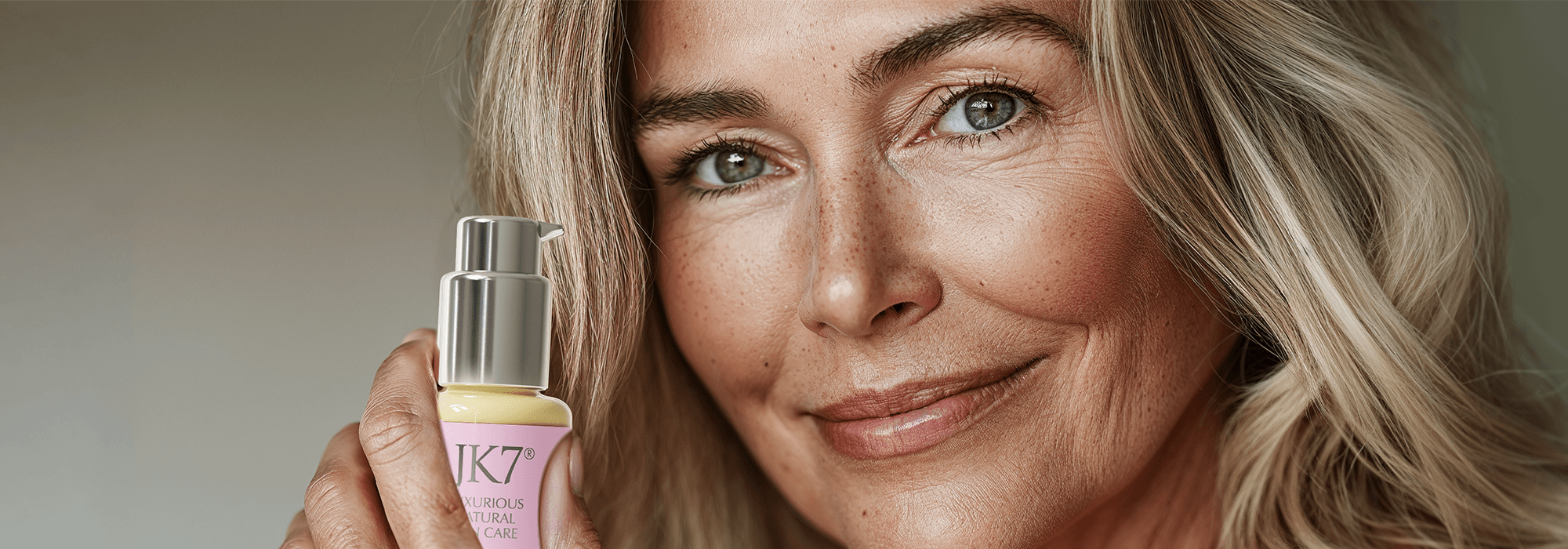


How Daily Habits Impact Skin Health
Skin health is shaped by how we live and how we care for our skin. Discover how daily balance and simple skin care rituals support calm, resilient, healthy-looking skin over time.
Skin health often reflects the balance of daily habits. Sleep, stress levels, nutrition, and skin care routines all influence how healthy your skin looks and feels. Long before modern dermatology formalized the connection between internal health and external complexion, traditional healing systems understood the skin as a mirror of everything happening beneath the surface.
At JK7, this understanding shapes everything. Skin health is the visible evidence of balance maintained across sleep, nutrition, movement, emotional well-being, and the rituals that hold these elements together.
So, what can you do to support healthier, more balanced skin? The answer lies in the habits and rituals that shape everyday well-being.
What Does Skin Health Really Mean Today?
Healthy skin is defined by its ability to recover from environmental stress, retain moisture through seasonal changes, and respond calmly to daily aggressors. In other words, skin health means comfort, resilience, and balance, rather than perfection.
At the center of that balance is our skin barrier. This outermost protective layer regulates moisture retention, shields against environmental pollutants, and maintains the biological stability that keeps the skin resilient and comfortable.
When the skin barrier is healthy, the complexion appears calm, even, and naturally luminous. In contrast, when it is weakened by harsh ingredients, oxidative stress, or lack of sleep, the skin will become sensitive, tight, and even irritated. Supporting the skin barrier is the foundation of any effective long-term skin health strategy.
Balanced vs Unbalanced Skin: What to Look For
Balanced skin has a recognizable quality. It feels comfortable throughout the day, looks even in tone, and carries a natural luminosity that doesn’t depend on heavy coverage. Its most telling characteristic is adaptability, or the ability to recover well from a late night, a change in climate, or a period of prolonged stress.
Unbalanced skin shows the opposite. Persistent dullness, uneven texture, redness, and reactivity are common signs that the skin is unbalanced. Dehydration that doesn’t resolve with moisturizer and recurring breakouts in the same zones also point to an underlying condition rather than a surface-level issue.
Skin balance is often influenced by cumulative factors such as ongoing stress, poor sleep, overly aggressive skin care routines, and nutrition. While some irritation or reactions can appear quickly, many visible changes in skin health tend to develop gradually over time.
Recognizing these signs is the first step toward understanding what the skin genuinely needs.
How Lifestyle Habits Affect Your Skin
Skin is one of the most responsive organs in the body. Over time, daily habits such as sleep quality, stress levels, diet, and skin care routines can influence how the skin looks and functions. Consistent patterns often have a greater impact on skin health than occasional fluctuations.

Sleep
During sleep, the skin enters its most active period of repair. Cell turnover increases, moisture levels rebalance, and the effects of daily environmental exposure begin to resolve.
Chronic sleep deprivation interrupts this process, leaving the complexion looking dull, uneven, and less able to retain hydration. Over time, consistently poor sleep weakens the skin barrier and slows the recovery that healthy skin depends on.
Stress
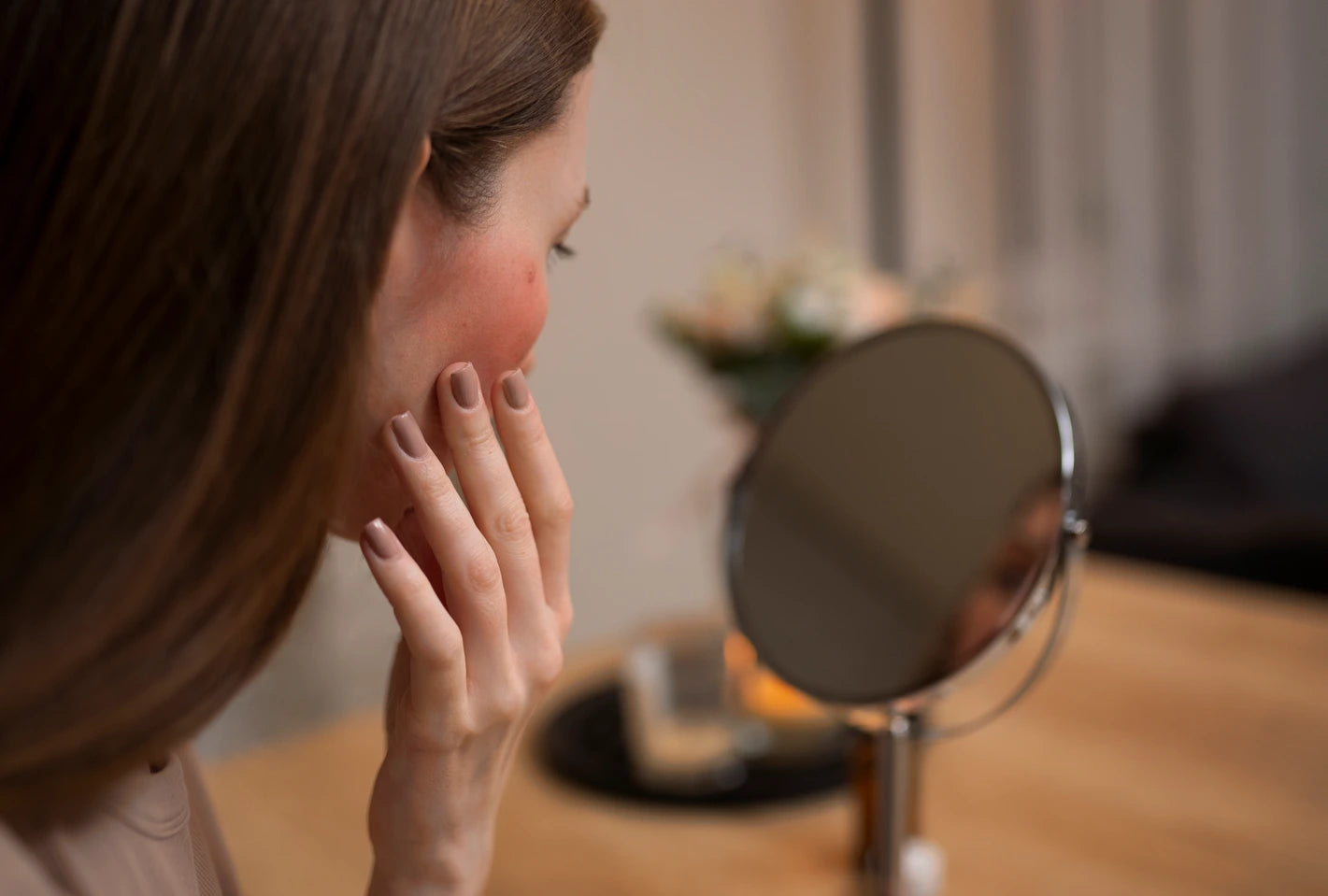
Prolonged stress elevates cortisol, a hormone that disrupts the skin barrier, increases oil production, and heightens sensitivity. The effects are gradual but cumulative.
Skin that once tolerated a routine without issue may become reactive, congested, or prone to redness during sustained periods of stress. Managing stress is not just a well-being practice. For many people, it is one of the most direct levers for improving skin health.

Nutrition
What the body receives internally shapes what the skin can produce externally. Adequate hydration maintains plumpness and supports barrier function. Nutrient-rich foods provide the building blocks for collagen, cellular repair, and a stable inflammatory response.
Diets high in refined sugar or processed ingredients, on the other hand, can accelerate the visible signs of skin aging and contribute to persistent congestion or uneven tone.
This relationship between lifestyle and complexion sits at the heart of the JK7 lifestyle philosophy. Skin is not a problem to be corrected, but a responsive system that mirrors how well the whole body is being cared for. When daily life supports balance, the skin tends to follow.
The Role of Skin Care Rituals in Supporting Healthy Skin
Consistent skin care rituals do more than deliver ingredients to the skin. They establish rhythm. A routine practiced daily, even a simple one, signals to the body that care is being taken. That consistency creates the conditions in which skin can stabilize, adapt, and gradually improve over time.
The quality of what goes onto the skin matters as much as the regularity of application. Harsh formulations, excessive exfoliation, and overlapping active ingredients can compromise the skin barrier faster than they improve it.
In contrast, high-quality natural ingredients, chosen for their beneficial compounds such as antioxidants, fatty acids, and botanical extracts, work with the skin's natural functions rather than disrupting them. The result is progress that is quieter but far more durable.
Simplicity and intention are underrated in skin care. A short but intentional ritual outperforms a complex regimen applied carelessly. Realistic expectations matter too. Skin that has been under stress for months does not necessarily transform in days. A well-chosen, consistent ritual offers something more valuable than speed, a steady return to balance, one that holds.
How Lifestyle and Skin Care Work Best Together
Lifestyle and skin care are most effective when they reinforce each other. A routine cannot fully compensate for chronic stress, just as balanced daily habits will not replace the support from a skin care regimen. Together, they create a consistent internal and external environment in which skin can genuinely maintain its balance.
The daily ritual itself becomes a point of connection between the two. A gentle cleanse in the morning or the simple act of hydrating the skin before bed may seem small, but these moments add up over time. Over time, they do not just benefit the skin but also reinforce the broader habit of paying attention to how the body feels.
If you are considering moving toward a more natural skin care approach, the principle is the same. Start simple and build consistency before complexity. The skin responds to care that is steady and considered, and so does the person giving it.
Skin Health as a Daily Act of Self-Care
A healthy skin is an ongoing result of the choices we made everyday, in how we rest, nourish ourselves, manage stress, and show up for the small rituals that hold everything together. When these choices are made with intention, the skin will reflect them over time.
This is the philosophy JK7 was built on. That genuine skin care is an act of self-care, one that should be done with intention. We never compromise, tapping into the power of what nature has to offer to create skin care products that deliver long-lasting radiance, health, and vitality to your skin.
No synthetic fillers or mass-produced formulas, only the purest, most potent ingredients to heal the skin and uplift your spirit.
Ready to transform your skin care regimen? Discover our natural skin care collection!
FAQ
Daily habits shape skin health more than most people realize. Rest supports the skin's overnight repair process, hydration maintains suppleness and tone, and stress management reduces the reactivity that often appears as sensitivity or uneven texture.
Over time, the skin reflects the quality of daily choices with remarkable consistency. Balance in daily life tends to produce balance in the complexion.
Yes. High-quality skin care provides meaningful support, but it works best when daily habits reinforce it. Chronic stress, poor sleep, and irregular routines create conditions that even well-formulated products cannot fully counteract.
Lifestyle and skin care work as a system. When both are considered together, the results are more stable and more lasting.
The skin responds well to rhythm and repetition. A simple routine practiced daily allows the skin to stabilize and adapt gradually over time. Constantly rotating products or layering too many actives disrupts that process, preventing the skin from finding its natural balance. A shorter, more consistent ritual will almost always outperform a complex one applied inconsistently.
Balanced skin feels comfortable throughout the day without tightness, oiliness, or the need for constant adjustment. It looks even in tone, calm in texture, and carries a natural luminosity that is not dependent on makeup. It is also very adaptable. It can recover steadily from stress, seasonal changes, or a disrupted night's sleep.
Persistent dullness, uneven texture, sensitivity to familiar products, recurring dehydration, and areas of redness or tightness are all signals worth noting. These are not flaws. They are the skin's way of communicating that something in the daily routine or lifestyle rhythm needs attention. Approaching them with curiosity rather than frustration leads to more effective and lasting responses.
Ingredients matter significantly. Natural, high-quality ingredients chosen for their compatibility with the skin's own biology support moisture retention, barrier integrity, and overall balance without disrupting the skin's natural functions. Harsh or poorly matched ingredients, even in well-intended formulations, can compromise the skin barrier and trigger the sensitivity and reactivity they were meant to address.
Begin with simplicity. A gentle cleanse, reliable hydration, and a consistent daily routine are more valuable than an elaborate regimen applied without intention. Alongside that, small lifestyle adjustments, prioritizing sleep, managing stress, and staying hydrated, create the internal conditions that allow skin care to work properly. Conscious skin health is built gradually, through steady habits rather than dramatic interventions.